
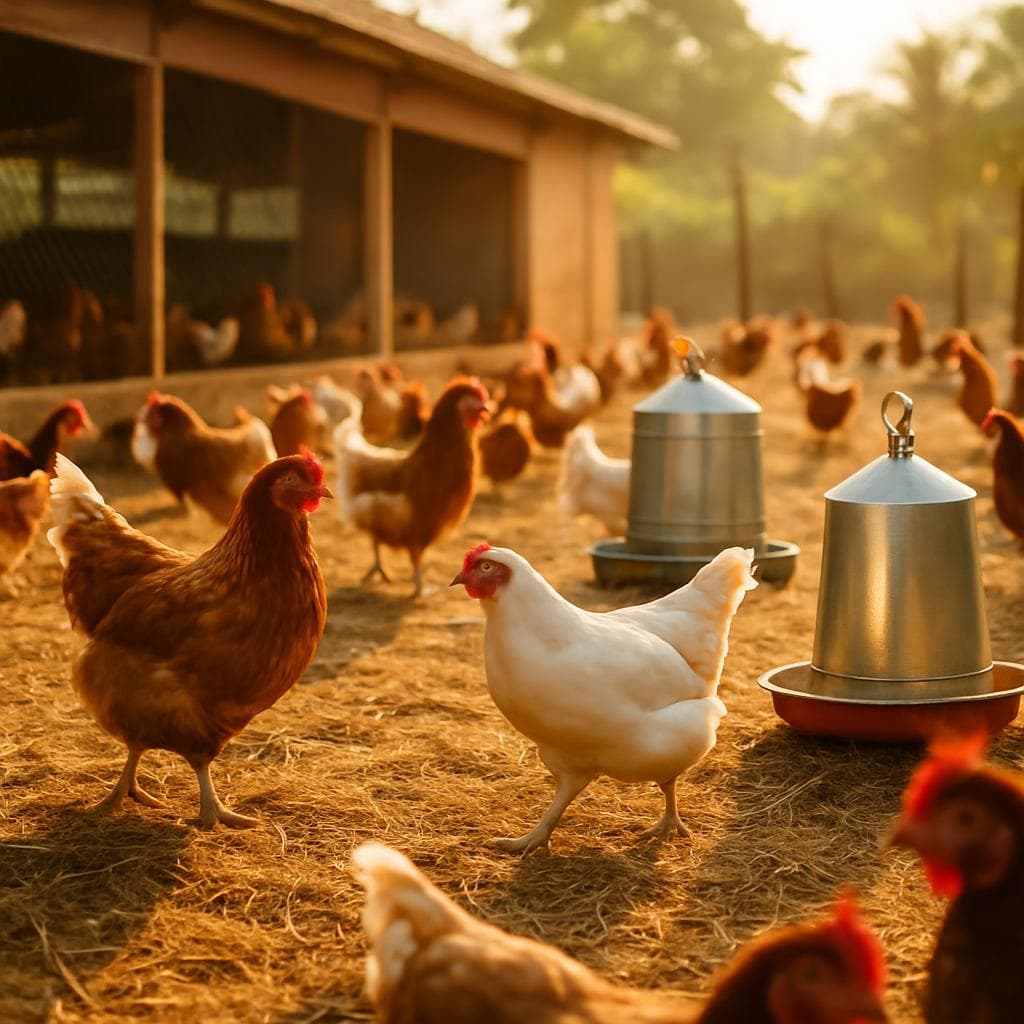
Poultry farming for layers is an essential activity for many poultry farmers in Côte d'Ivoire. Understanding the laying curve, the peak production and the timing of culling is crucial to optimise the profitability of your farm.
The laying curve
The laying curve represents the evolution of egg production over the life cycle of laying hens. Generally, hens start laying eggs at around 18 to 20 weeks of age. Initially, egg production is relatively low, but it gradually increases until it reaches a peak. This peak production typically occurs between 24 and 30 weeks, when the hens reach their full laying capacity.
To maximise the laying curve, it is essential to provide optimal farming conditions, particularly in terms of nutrition, lighting and environmental management. A balanced diet, rich in protein and calcium, is vital to support egg production. Additionally, adequate lighting stimulates laying by mimicking natural conditions.
The peak production
The peak production is the period during which layers produce the most eggs. For farmers, it is crucial to identify this moment to maximise the harvest. In Côte d'Ivoire, climatic conditions can influence production. It is therefore advisable to regularly monitor the health of the birds and adjust their diet according to the specific needs of each period.
Regular monitoring of the performance of layers will allow you to quickly detect any deviation from the expected production. Factors such as stress, diseases or poor nutrition can affect laying. In case of a drop in production, it is important to analyse the causes and make the necessary corrections.
The culling of layers
After a certain period, generally around 72 to 80 weeks, laying hens see their production decrease. It is then time to consider culling. Culling involves replacing old layers with new ones. This helps maintain optimal production and ensures the profitability of your farm.
Before proceeding with culling, it is advisable to carefully plan the renewal of the flock. This includes selecting new breeds suited to local conditions and implementing a poultry management system to ensure a smooth transition.
Conclusion
For a layer farmer in Côte d'Ivoire, understanding the laying curve, identifying the peak production and knowing when to cull the flock are key steps to ensure the profitability of their activity. By following these practical tips, you can optimise your egg production and improve the health of your flock. Do not hesitate to regularly inform yourself about best practices and adapt your farming methods based on feedback. Take action today to maximise your production and ensure the sustainability of your farm.
--- *Source: NEXTEKCI — In-house expertise — summary and analysis by NEXTEKCI.*