
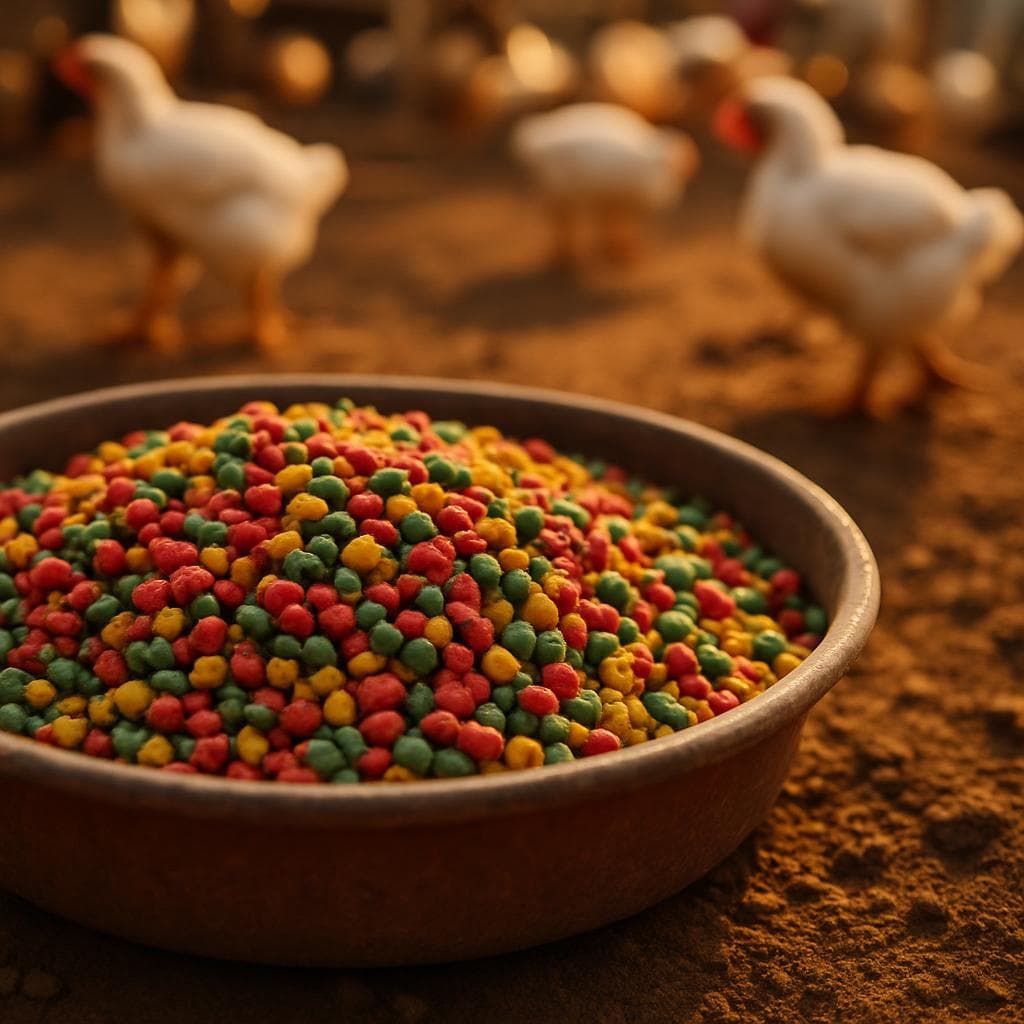
Feeding broilers is a fundamental element to ensure their health and optimal growth. Nutritional needs evolve as the birds go through the different phases of their development: starter, grower, and finisher. Understanding these needs is essential to maximise the productivity of your poultry farming.
Starter Phase (0 to 3 weeks)
During the first weeks, day-old chicks need a diet rich in protein and energy. This promotes good muscle and bone development. It is recommended to provide a specific starter feed, which generally contains a high protein level. During this period, it is crucial to ensure that the chicks have constant access to fresh, clean water, as hydration is essential for their growth.
Grower Phase (3 to 6 weeks)
From the third week onwards, the nutritional needs of broilers change. They require a diet that promotes rapid growth while maintaining good health. Grower feed, with a slightly lower protein content than starter feed, should be introduced. Farmers should ensure to adjust the feeding quantities according to the weight of the birds and their appetite. A good practice is to regularly monitor the birds to ensure they are feeding properly and do not show signs of stress or disease.
Finisher Phase (6 weeks and beyond)
The finisher phase is crucial for preparing the broilers for slaughter. The diet should be energy-rich to promote fattening. Finisher feeds generally contain less protein but more carbohydrates and fats, in order to optimise carcass weight. During this period, it is recommended to continue offering clean water and to monitor feed consumption. Good management of feeding during this phase can have a significant impact on the final weight of the birds.
Practical Tips for Ivorian Farmers
- Monitoring Quantities: Keep a record of the amount of feed given and the consumption of the birds. This will help you adjust the rations according to their growth.
- Feed Quality: Ensure the quality of the feeds provided. Avoid poor-quality feeds that can harm the health of the birds.
- Local Adaptation: Consider the locally available ingredients to formulate balanced and economical rations.
- Continuous Training: Stay informed about best practices in feeding and farming. Participate in workshops or training to improve your skills.
Conclusion
Feeding broilers is a key factor for the success of your poultry farming. By respecting the nutritional needs at each phase of their development and applying practical advice, you can improve the health and productivity of your birds. Do not hesitate to inquire about current feed prices by contacting suppliers via WhatsApp. Take action today to optimise the feeding of your poultry and ensure a prosperous farming operation.
--- *Source: NEXTEKCI — In-house expertise — summary and analysis by NEXTEKCI.*