
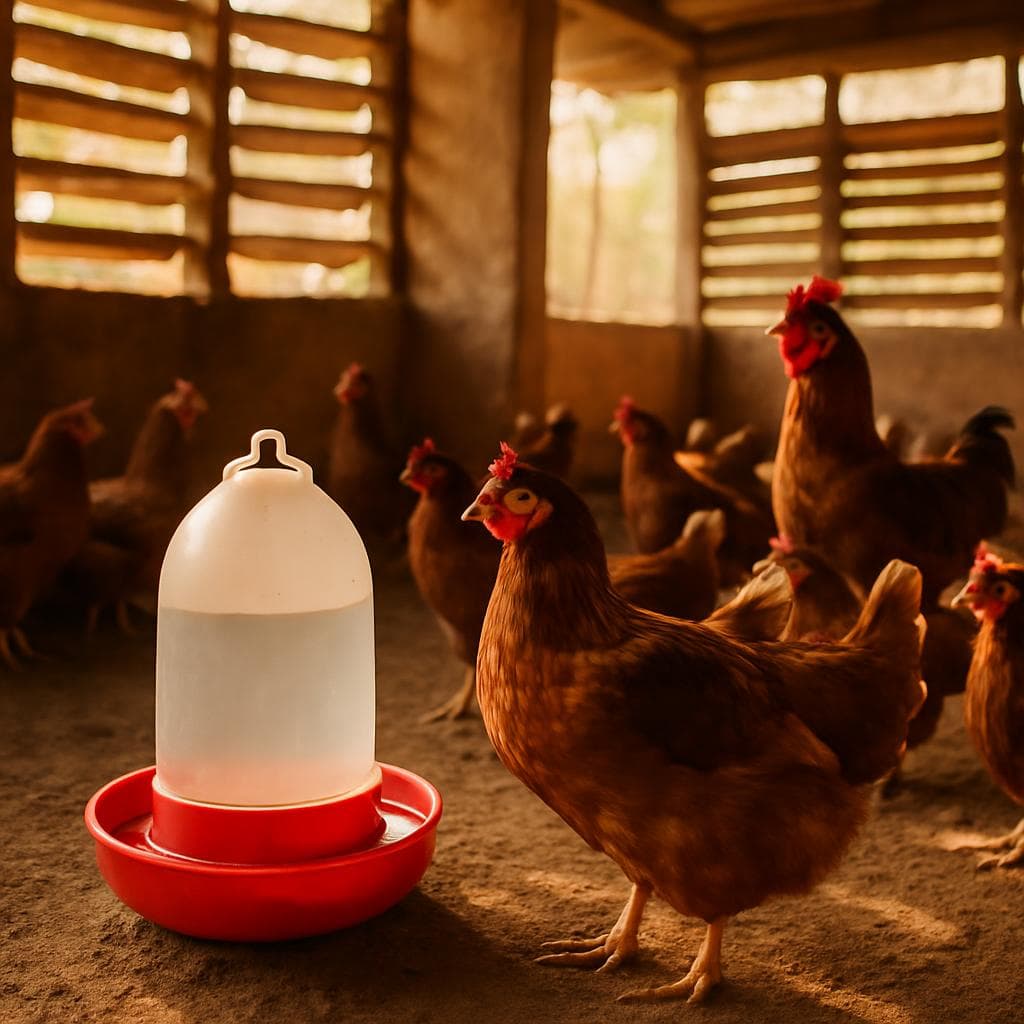
Excessive heat in chicken coops can have detrimental effects on the health and productivity of poultry. In Côte d'Ivoire, where the climate is often hot and humid, it is essential to implement effective strategies to manage heat. Here are some practical tips on ventilation and watering.
Ventilation: a Key Element
- Design of the Chicken Coop: Ensure that your chicken coop is well designed to promote air circulation. Windows and openings should be strategically placed to allow for natural airflow. A good orientation of the building can also help reduce heat.
- Use of Fans: In areas where heat is particularly intense, installing fans can be beneficial. These devices help create a breeze, which can lower the internal temperature of the chicken coop. Make sure to position them to direct air towards the areas where the poultry are located.
- Misting: Misting is an effective technique for lowering temperature. By spraying water into the air, you create humidity that can cool the environment. However, it is important not to overly humidify the air, as this can promote the development of diseases.
Watering: an Essential Need
- Access to Fresh Water: Poultry must have constant access to clean, fresh water. During hot periods, their water consumption increases. Ensure that drinkers are regularly filled and that they are not exposed to the sun, which can warm the water.
- Suitable Watering Systems: Opt for watering systems that minimise waste and ensure that poultry can hydrate easily. Constant-level drinkers or automatic drinkers can be good solutions.
- Monitoring Water Consumption: Be attentive to your poultry's water consumption. A sudden decrease may indicate a health problem or heat stress. If in doubt, do not hesitate to consult a veterinarian.
Complementary Practices
- Space Arrangement: Create shaded areas inside and outside the chicken coop. This can include using shade nets or planting trees nearby.
- Density Management: Avoid overcrowding your poultry. Too high a density can exacerbate heat stress. Follow recommendations on the space required per animal.
- Health Monitoring: Keep an eye on your poultry's behaviour. Signs of heat stress include rapid breathing, ruffled feathers, and reduced feeding.
Conclusion
Managing heat in the chicken coop is essential to ensure the welfare and productivity of your poultry. By implementing adequate ventilation and ensuring a supply of fresh water, you can reduce heat stress and improve the health of your flock. Do not wait for heat to become a problem; act now to create a comfortable environment for your poultry.
--- *Source: NEXTEKCI — In-house expertise — summary and analysis by NEXTEKCI.*