
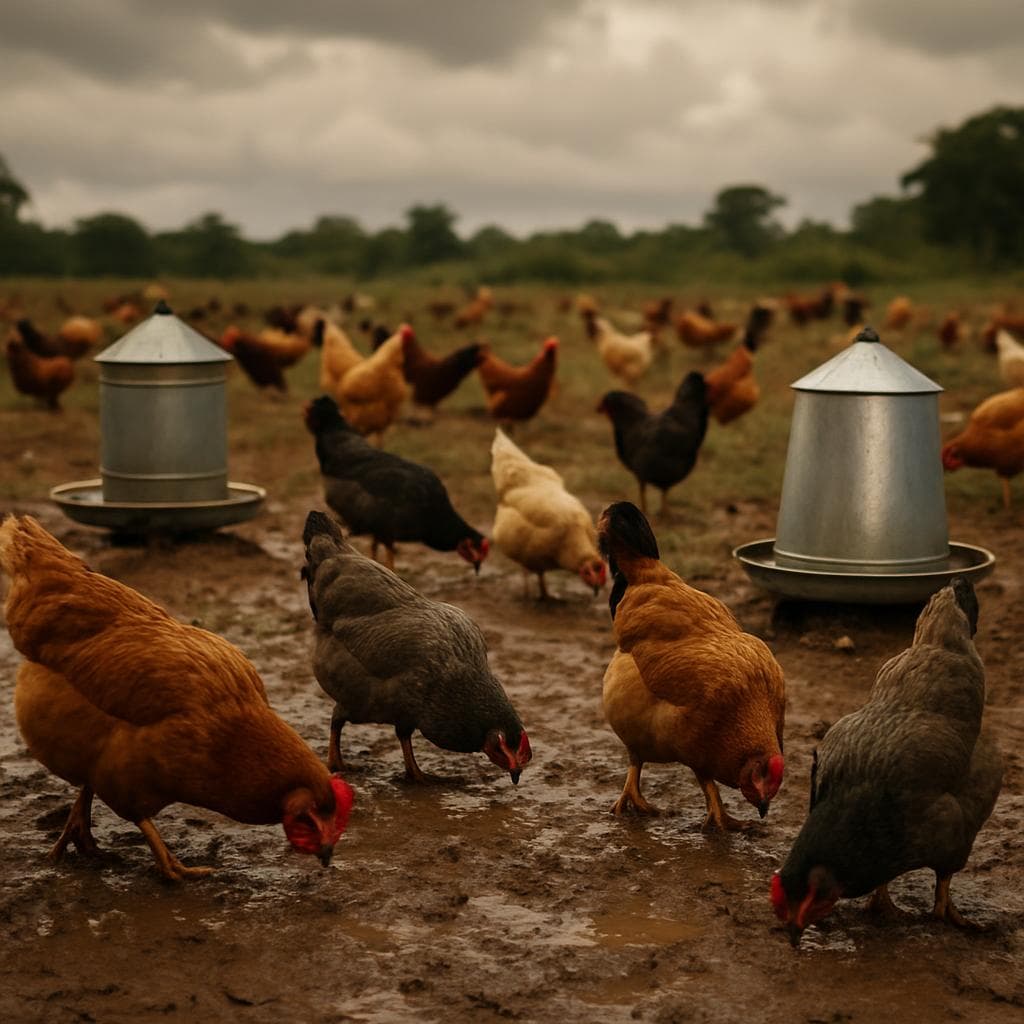
The rainy season in Côte d'Ivoire brings increased humidity that can have significant consequences on poultry farming. It is crucial for poultry farmers to understand how to manage these conditions to ensure the health and well-being of their animals.
Managing humidity Excessive humidity can create an environment conducive to various diseases. To minimise the effects of humidity, here are some practical tips:
- Adequate ventilation: Ensure that your chicken coop is well-ventilated. Air should circulate freely to avoid the accumulation of humidity. Using fans or installing strategic windows can help improve air circulation.
- Temperature monitoring: During the rainy season, it is important to monitor the temperature inside the chicken coop. A temperature that is too high combined with high humidity can lead to stress in the poultry.
Choosing litter Litter plays an essential role in managing humidity. Here are some recommendations:
- Use absorbent materials: Opt for litters that absorb moisture well, such as straw or wood shavings. Avoid materials that retain moisture, as they can promote the proliferation of bacteria and fungi.
- Change litter regularly: It is essential to replace wet litter with clean, dry litter. This not only helps control humidity but also prevents diseases.
Disease prevention Humidity can also promote the onset of diseases. To reduce risks, follow these tips:
- Vaccination: Ensure that your poultry are up to date with their vaccinations. This will protect them against certain common diseases that can be exacerbated by humid conditions.
- Hygiene: Maintain a clean environment by regularly cleaning the chicken coop and disinfecting equipment. Good hygiene is essential to prevent the spread of diseases.
- Health monitoring: Closely observe your poultry for any signs of disease. Early treatment can make the difference between a quick recovery and the loss of animals.
Conclusion Raising poultry during the rainy season requires special attention to humidity, litter and disease prevention. By implementing these practical tips, you can create a healthy environment for your poultry, minimise the risks of diseases and optimise your production. Act now to prepare your farming for the challenges of the rainy season and ensure the prosperity of your poultry business.
--- *Source: NEXTEKCI — In-house expertise — summary and analysis by NEXTEKCI.*