
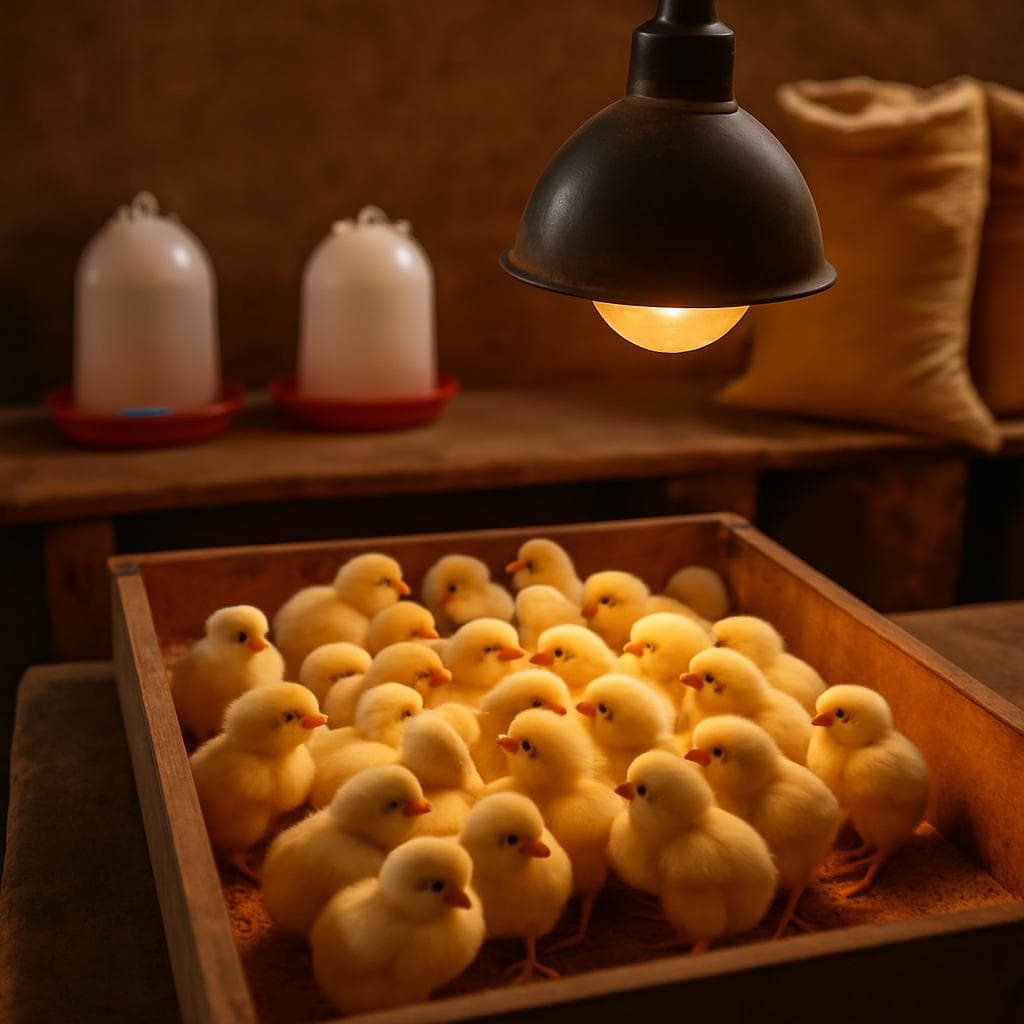
The first hours of a chick's life are decisive for its health and growth. Poultry farmers must pay particular attention to several aspects to ensure a good start. Here are some practical tips to succeed in this crucial stage.
1. Preparing the environment
Before the arrival of the chicks, it is essential to prepare their environment. The temperature should be maintained between 32 and 35 °C during the first 48 hours. Use heat lamps to create adequate warmth in the chicken coop. Also, ensure that the space is clean, dry, and well-ventilated to prevent diseases.
2. Feeding and hydration
Upon arrival, the chicks must have access to fresh, clean water. It is recommended to add an electrolyte to the water to aid in rehydration and recovery from transport stress. For feeding, offer a starter feed rich in protein and essential nutrients. Avoid abruptly changing their diet, as this can disrupt their digestion.
3. Observation and behaviour
Carefully observe the behaviour of your chicks. They should be active, curious, and gather under the heat source. If they appear lethargic or cluster too far from the heat, this may indicate a temperature or health issue. If in doubt, do not hesitate to adjust the temperature or consult a veterinarian.
4. Disease management
Disease prevention is paramount. Ensure that the chicks are vaccinated according to recommended protocols. Avoid mixing chicks of different ages and limit movement in the chicken coop to reduce the risk of contamination. Also, keep an eye on hygiene by regularly cleaning the drinkers and feeders.
5. Socialisation and stress
Chicks are social animals. Therefore, it is important to introduce them into a group if you have several. This helps them adapt and reduces stress. Avoid loud noises and sudden movements around them during the first few days, as this can frighten them and affect their development.
Conclusion
The first 72 hours after receiving your chicks are crucial for their future. By following these practical tips, you increase your chances of success in poultry farming. Be attentive to their well-being and do not hesitate to learn more about best farming practices. A good start is the key to a successful poultry production in Côte d'Ivoire.
--- *Source: NEXTEKCI — In-house expertise — summary and analysis by NEXTEKCI.*