
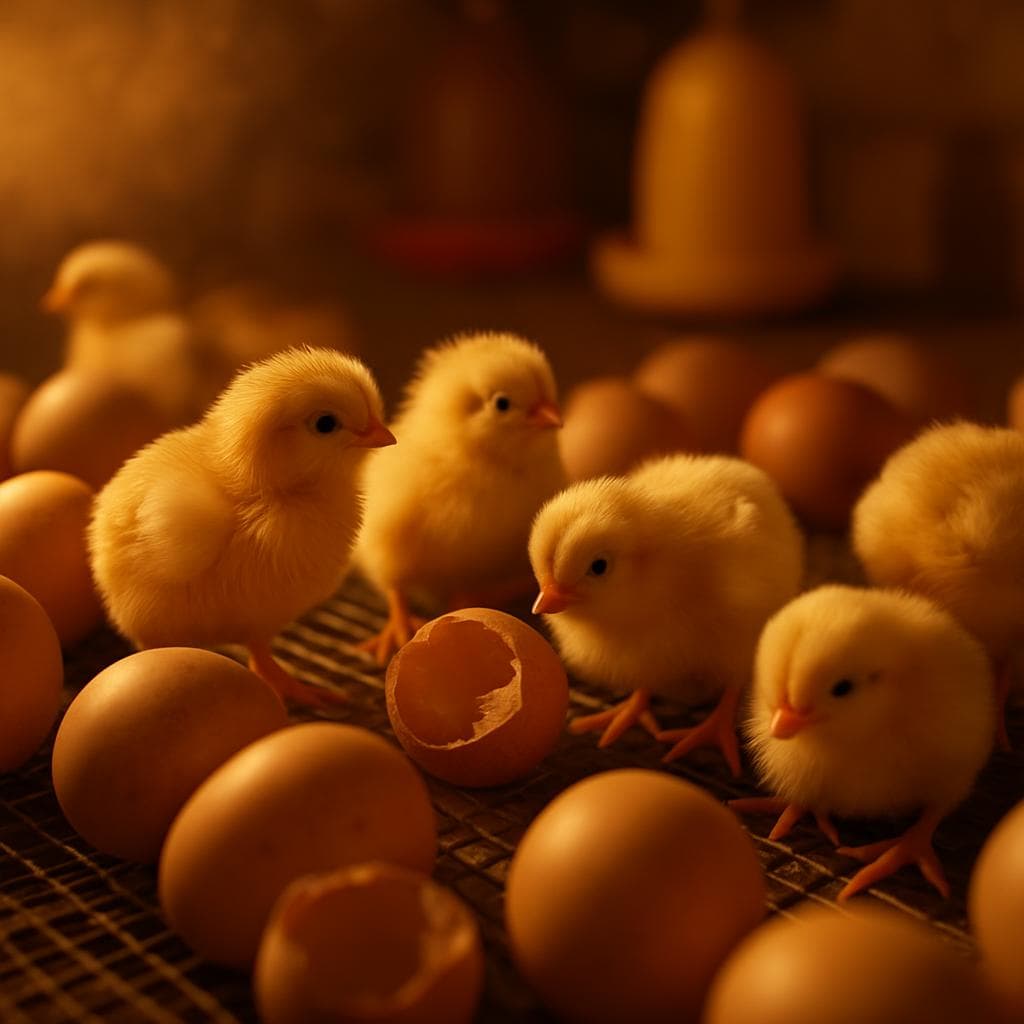
Starting a new batch of day-old chicks is an exciting yet delicate step for any poultry farmer. The first 72 hours are crucial for laying the foundation for healthy growth and avoiding future problems. Here are some practical tips to help you manage this decisive phase well.
1. Preparing the Environment
Before the arrival of the chicks, ensure that their environment is ready. The ideal temperature in the chicken coop should be around 32 to 35 °C during the first few days. Use heat lamps to maintain this temperature, checking regularly with a thermometer. A temperature that is too low can lead to respiratory diseases, while a temperature that is too high can cause stress.
2. Adequate Feeding
As soon as they arrive, it is crucial that the chicks have access to clean, fresh water. Hydration is essential for their acclimatisation. For feeding, opt for a quality starter that is rich in protein and nutrients. Chicks have specific nutritional needs that must be met to promote their growth. Avoid changing their diet too quickly, as this can disrupt their digestion.
3. Health Monitoring
The first few days are also the ideal time to monitor the health of your chicks. Observe their behaviour: they should be alert and active. If you notice isolated, apathetic chicks or those having difficulty moving, this may be a sign of illness. Do not hesitate to consult a veterinarian if you notice any abnormalities.
4. Stress Management
Transport and changes in environment can be stressful for chicks. To minimise this stress, handle them gently and avoid loud noises or sudden movements around them. Create a calm and reassuring environment. You can also use stress management techniques, such as dim lighting, to help them acclimatise.
5. Hygiene and Cleanliness
Maintaining good hygiene is essential to prevent diseases. Regularly clean the drinkers and feeders, and ensure that the space is well-ventilated. Good ventilation helps reduce humidity and the risk of diseases. If you use litter, change it frequently to avoid the accumulation of waste.
Conclusion
The first 72 hours after receiving your day-old chicks are decisive for their future. By ensuring that their environment is suitable, monitoring their health, and providing quality feed, you are putting all the chances on your side for a successful poultry farming venture. Do not wait to put these tips into practice and make sure to closely follow the progress of your chicks. If you have any questions or need further advice, do not hesitate to contact us on WhatsApp. Every detail counts to ensure the success of your poultry farming in Côte d'Ivoire!
--- *Source: NEXTEKCI — In-house expertise — summary and analysis by NEXTEKCI.*